
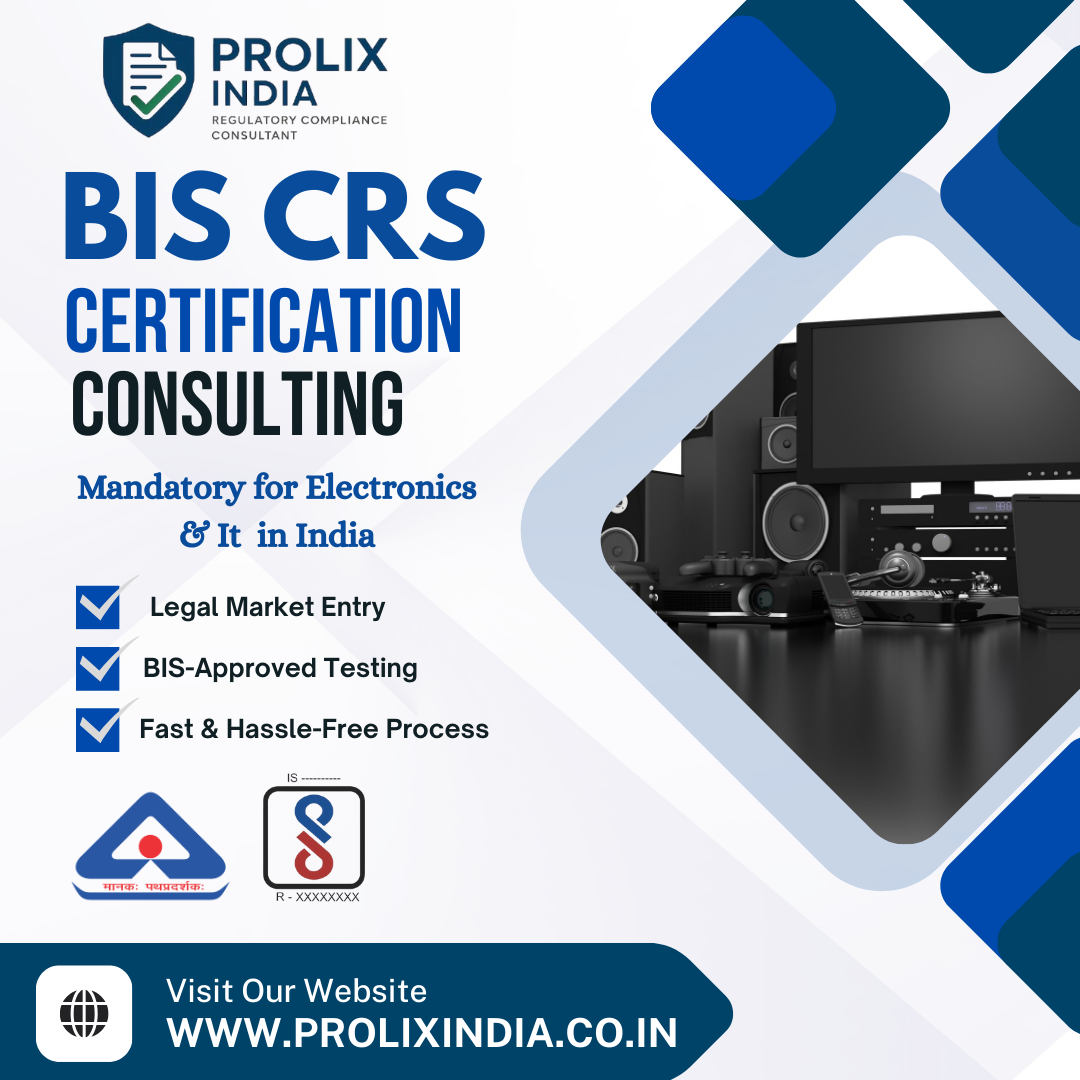
BIS CRS Registration: A Comprehensive Guide for Electronic Product Certification in India
Description
India is one of the fastest-growing markets for electronic and IT products. With increasing demand for smartphones, laptops, smart devices, and electronic accessories, ensuring product safety and quality has become a top priority. To regulate the quality of electronic products and protect consumers, the Government of India introduced the Compulsory Registration Scheme (CRS) under the Bureau of Indian Standards (BIS).
This guide explains the importance of BIS CRS Registration, the certification process, and compliance requirements for manufacturers and importers of electronic products in India.
What is BIS CRS Registration?
BIS CRS Registration is a mandatory conformity assessment scheme for electronic and IT products in India. It was introduced under the Electronics and Information Technology Goods (Requirements for Compulsory Registration) Order issued by the Ministry of Electronics and Information Technology (MeitY).
Under this scheme, manufacturers must ensure that their products comply with relevant Indian Standards and obtain a registration number from BIS before selling or importing them in India. The registration confirms that the product has been tested and meets prescribed safety and performance criteria.
Understanding BIS CRS Certification
BIS CRS Certification is the approval granted by the Bureau of Indian Standards after a product successfully passes testing in a BIS-recognized laboratory. Unlike some other BIS schemes, CRS does not typically require factory inspection, making it relatively faster and more accessible.
Once certified, the manufacturer is allowed to use the standard mark and registration number on the product and packaging, indicating compliance with Indian regulations.
CRS Certification and CRS Registration Explained
CRS Certification refers to the technical approval granted after product testing and document verification. CRS Registration refers to the official listing of the product with BIS and issuance of a registration number.
Both processes are essential for legal compliance. Without CRS Registration, electronic products cannot be manufactured, imported, distributed, or sold in India.
BIS Registration for Electronic Products
BIS Registration for electronic products is mandatory for a wide range of IT and electronic devices. The list of products covered under the CRS scheme is regularly updated by the government to include new technologies and devices.
Some commonly regulated products include:
-
Mobile phones and smartphones
-
Laptops and notebooks
-
Tablets and computers
-
Power banks and chargers
-
LED lamps and drivers
-
Smart watches and wearable devices
-
Audio and video equipment
-
Networking devices such as routers and modems
-
CCTV cameras and surveillance equipment
-
Power adaptors and power supplies
As the electronics industry continues to grow, more product categories are being added to ensure safety and quality standards are maintained.
Why BIS Certification for Electronic Products is Important
BIS Certification for electronic products is crucial for several reasons:
Legal Requirement
Selling uncertified electronic products in India is illegal. Authorities can seize non-compliant products, impose penalties, or ban their sale.
Safety Assurance
Certification ensures that products meet safety standards, reducing the risk of electrical shocks, overheating, short circuits, and other hazards.
Consumer Confidence
BIS-certified products carry a mark of quality and reliability, increasing consumer trust and brand credibility.
Market Access
Without BIS registration, products cannot be imported or sold in India. Certification ensures smooth customs clearance and distribution.
Overview of the BIS CRS Scheme
The BIS CRS Scheme is a self-declaration-based conformity assessment system supported by laboratory testing. Manufacturers declare that their products comply with relevant Indian Standards, supported by test reports from recognized laboratories.
Key features of the CRS Scheme include:
-
Mandatory product testing in BIS-recognized laboratories
-
Registration granted per product model and brand
-
No routine factory audit in most cases
-
Registration validity of two years, with renewal options
-
Mandatory marking of BIS registration number on the product
The scheme applies to both domestic and foreign manufacturers.
Who Needs BIS CRS Registration?
The following entities are required to obtain BIS CRS Registration:
-
Indian manufacturers producing electronic products
-
Foreign manufacturers exporting electronic goods to India
-
Brand owners who outsource manufacturing
-
Importers and distributors bringing products into India
Foreign manufacturers must appoint an Authorized Indian Representative (AIR) who will act as a liaison with BIS and handle regulatory compliance in India.
Process of BIS CRS Registration
The registration process involves several structured steps:
1. Product Testing
The manufacturer must send product samples to a BIS-recognized laboratory for testing according to the relevant Indian Standard. The laboratory evaluates safety, performance, and compliance parameters and issues a test report.
2. Document Preparation
Manufacturers must prepare and submit the required documents, including:
-
Application form
-
Test report from a BIS-recognized laboratory
-
Product technical specifications
-
Manufacturing details and factory information
-
Trademark or brand authorization documents
-
Authorization letter for Authorized Indian Representative (for foreign manufacturers)
3. Online Application Submission
The application is submitted through the BIS online portal along with the prescribed fees and supporting documents.
4. Review and Verification
BIS officials review the application, verify documents, and may seek clarifications if required.
5. Grant of Registration
Once approved, BIS issues a registration number that must be displayed on the product, packaging, and user manual.
Timeline and Validity of CRS Registration
The typical timeline for obtaining BIS CRS Registration is 3 to 6 weeks, depending on product testing, documentation accuracy, and application processing.
The registration is valid for two years and can be renewed by submitting renewal documents and fees before expiry.
Marking and Labeling Requirements
After obtaining registration, manufacturers must mark the following on the product and packaging:
-
BIS registration number
-
Standard mark
-
Manufacturer’s name or trademark
These markings ensure traceability and help regulatory authorities identify certified products.
Penalties for Non-Compliance
Failure to comply with BIS CRS requirements can result in:
-
Seizure of goods by authorities
-
Monetary fines and penalties
-
Product recall and destruction
-
Legal action and business restrictions
Compliance is essential to avoid disruptions and protect brand reputation.
Common Challenges in CRS Registration
Manufacturers often face challenges such as:
-
Identifying applicable Indian Standards
-
Coordinating with BIS-recognized testing laboratories
-
Preparing accurate technical documentation
-
Delays due to incomplete applications
-
Regulatory complexities for foreign manufacturers
Professional consultants can help streamline the process and minimize delays.
Benefits of BIS CRS Certification
Obtaining CRS Certification offers several benefits:
-
Ensures compliance with Indian regulatory requirements
-
Enhances product quality and safety assurance
-
Builds brand credibility and customer trust
-
Enables smooth import and market entry
-
Reduces legal and commercial risks
-
Improves competitiveness in the Indian market
Future Outlook of the BIS CRS Scheme
The Indian government continues to expand the CRS product list to include emerging technologies such as IoT devices, smart home appliances, and advanced electronics. This expansion highlights the growing importance of regulatory compliance in India’s electronics sector.
Manufacturers must stay updated with regulatory changes and ensure timely certification to maintain uninterrupted market access.
Conclusion
BIS CRS Registration is a critical requirement for electronic and IT products sold in India. It ensures that products meet safety and quality standards, protecting consumers and strengthening the credibility of manufacturers and brands. The process involves product testing, documentation, and BIS approval, making it essential to follow the correct procedures and timelines.
With increasing regulatory scrutiny and expanding product coverage, manufacturers and importers must prioritize compliance to avoid penalties and business disruptions. For businesses seeking expert guidance and end-to-end support in the registration process, Prolix India provides professional assistance to simplify BIS CRS Registration and ensure smooth regulatory compliance.
Tag
Location
Contact Information
Author Info
BIS CRS Registration: A Comprehensive Guide for Electronic Product Certification in India 0 reviews
Login to Write Your ReviewThere are no reviews yet.









-
March 16, 2026






-
March 16, 2026